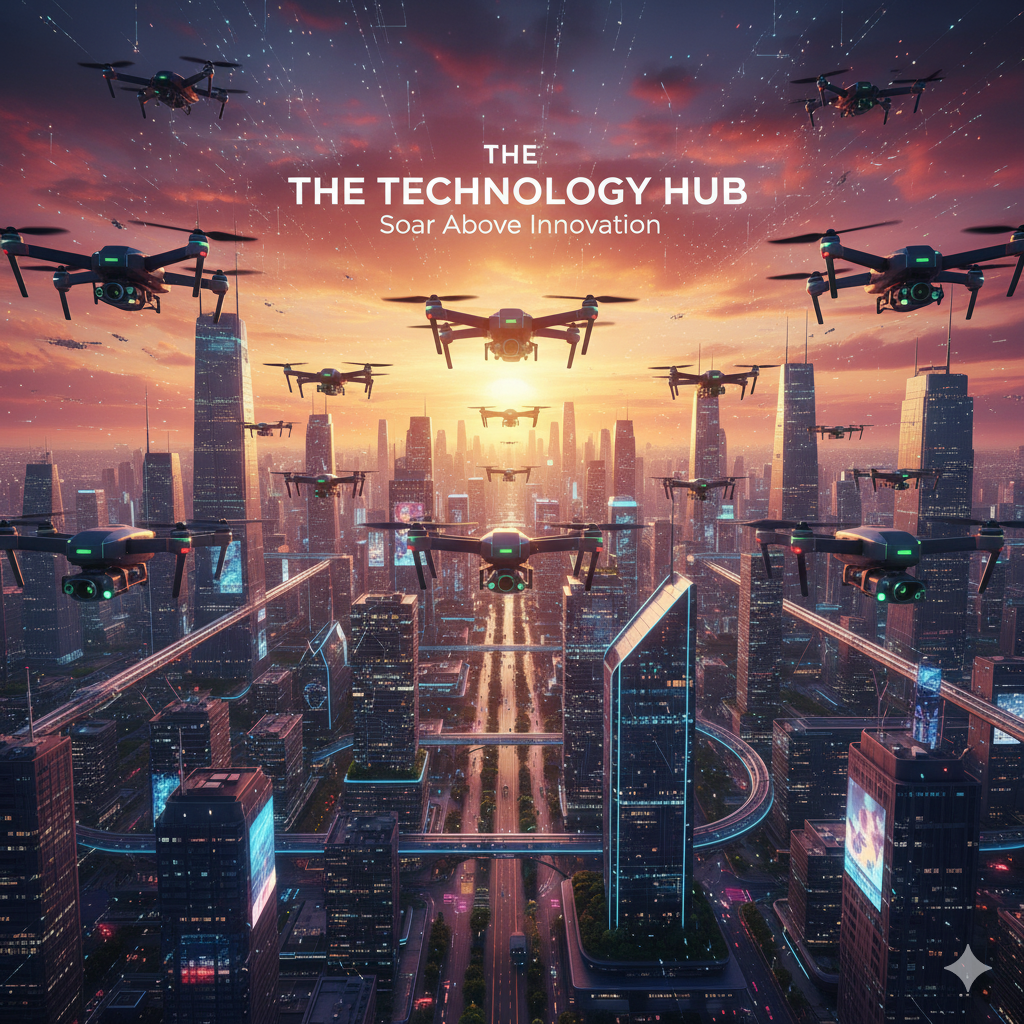
🌍 UAV Drones: The Sky’s Smartest Revolution 🚁
Welcome to the future of flight — where machines soar, think, and act smarter than ever before! ✨
From breathtaking aerial photography to life-saving rescue missions, UAV drones (Unmanned Aerial Vehicles) have truly redefined what’s possible in the sky.
But what exactly are UAV drones, how do they work, and why are they transforming industries across the world? Let’s take off and explore everything you need to know! 🚀
🧠 Understanding UAV Drones — The Technology Behind the Sky
🛩️ What Exactly Are UAV Drones?
A UAV (Unmanned Aerial Vehicle) — often called a drone — is an aircraft that operates without a human pilot on board.
Instead, it’s controlled remotely by an operator or navigates autonomously using onboard sensors, cameras, and artificial intelligence (AI).
In simple terms —
“It’s a flying robot powered by smart technology.” 🤖✈️
⚙️ How UAV Drones Work
UAV drones rely on a mix of mechanical design, software intelligence, and wireless communication.
Here’s what makes them fly so intelligently:
-
Flight Controller (Brain):
Acts as the main processor that receives and manages data from all sensors. -
GPS Module:
Helps the drone know its exact location and navigate precisely — whether it’s capturing videos or mapping large fields. -
IMU (Inertial Measurement Unit):
Measures acceleration and orientation, ensuring smooth and stable flight. -
Motors and Propellers:
Provide the lift and control required for movement. -
Cameras and Sensors:
Capture real-time imagery, detect obstacles, and help drones make decisions autonomously.
Modern UAVs also include AI algorithms, enabling features like autonomous pathfinding, collision avoidance, and object recognition — all without human input!
🧩 The Types of UAV Drones
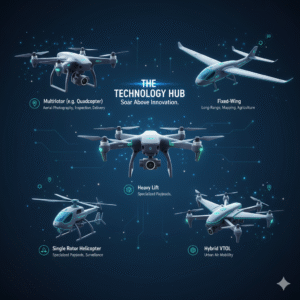
UAV drones come in many shapes and sizes — each designed for a specific task or environment. Let’s break them down:
1️⃣ Fixed-Wing UAVs
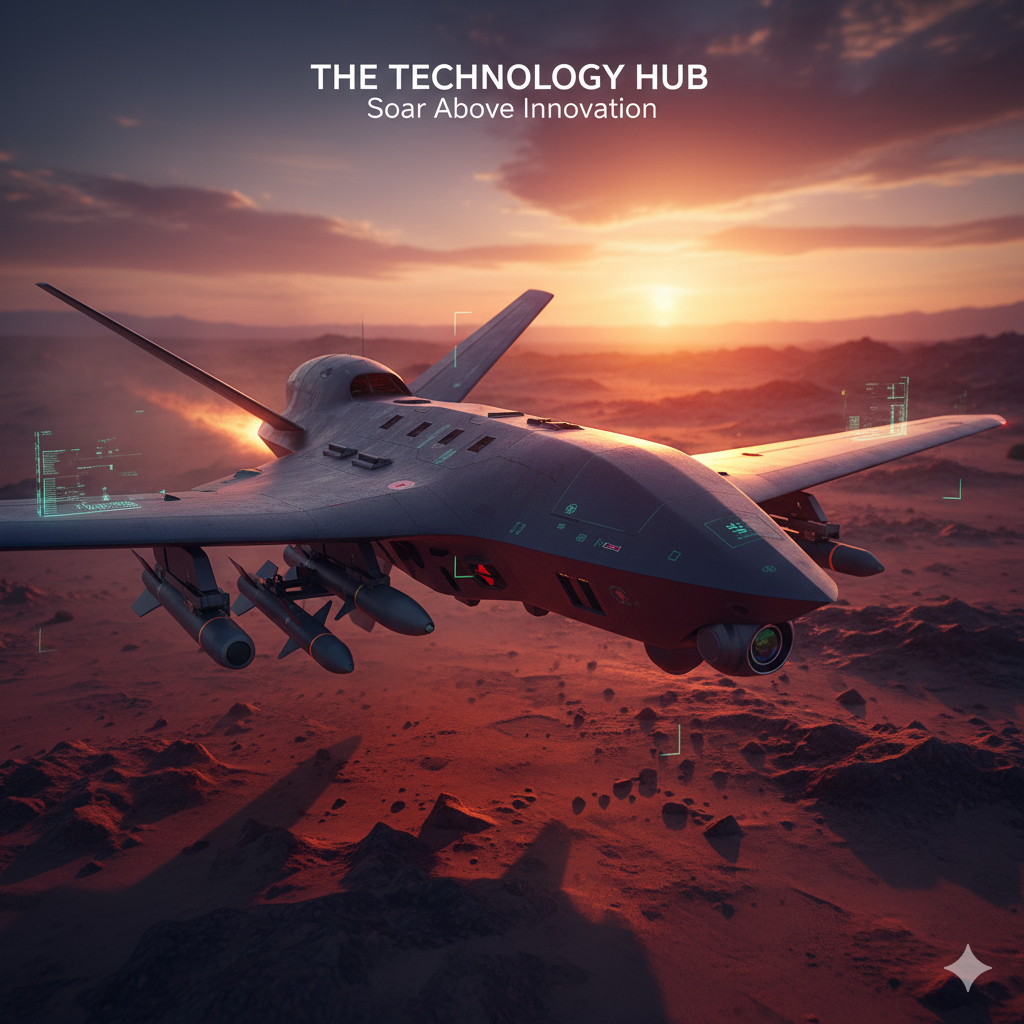
These look more like traditional airplanes.
-
They glide forward using lift generated by wings.
-
Perfect for long-distance missions like mapping, border surveillance, and agriculture.
-
Examples: Parrot Disco, Boeing ScanEagle
2️⃣ Rotary-Wing UAVs (Multirotors)
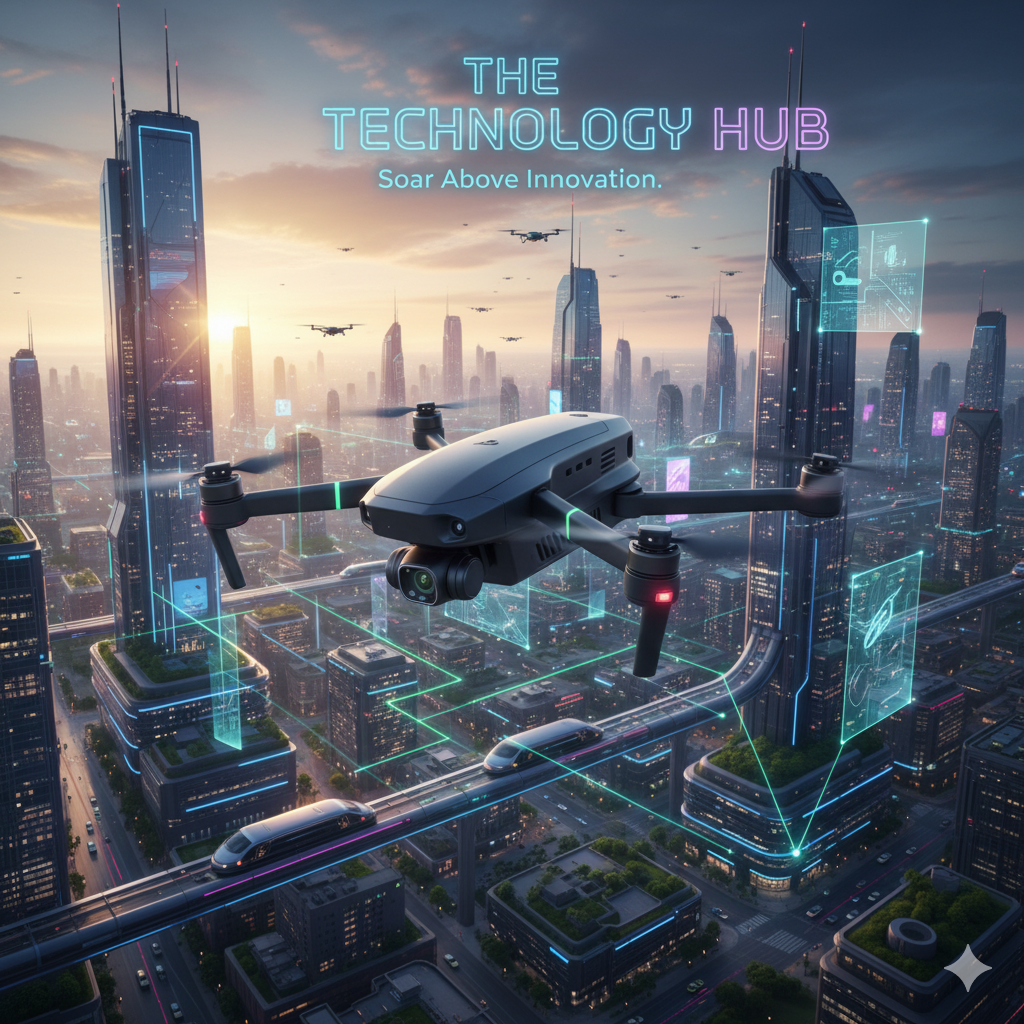
These are the most common drones we see today — with four (quadcopters) or more rotors.
-
Ideal for hovering, photography, inspection, and short-distance tasks.
-
Example: DJI Mavic Series, Skydio 2
3️⃣ Hybrid UAVs
A combination of fixed-wing efficiency and multirotor flexibility.
-
They can take off vertically and fly long distances efficiently.
-
Used for delivery systems and industrial mapping.
4️⃣ Nano & Micro Drones
Tiny but powerful!
-
Used in research, security, and even medical applications for confined spaces.
🌐 UAV Drone Classifications by Usage
UAVs aren’t just categorized by design — they’re also grouped by purpose:
| Category | Use Case | Example |
|---|---|---|
| Military UAVs | Surveillance, combat, intelligence | Predator, Reaper |
| Commercial UAVs | Delivery, agriculture, construction | DJI Phantom, Skydio X10 |
| Recreational UAVs | Photography, hobby flying | Mini drones |
| Industrial UAVs | Infrastructure inspection, mapping | Parrot Anafi Ai |
| Environmental UAVs | Disaster response, wildlife tracking | Solar-powered long-range drones |
🚀 The Evolution of UAV Drones — From Warzones to Workspaces
The concept of unmanned flight started back in World War I, when pilotless planes were tested for military missions.
But the real revolution began in the 2000s, when GPS and AI technologies allowed drones to become smarter, lighter, and more accessible.
Today, UAV drones are used by everyone — from filmmakers to farmers — and are reshaping how we see and interact with our world. 🌏
🏙️ The Real-World Impact — Drones Changing the Future
Now that we know how UAVs work, let’s explore how they’re transforming industries and lives across the globe. 🌍✨
🛡️ 1. UAV Drones in Defense and Security
Military UAVs are among the earliest and most advanced forms of drones.
They’ve become essential for:
-
Surveillance and reconnaissance in hostile zones
-
Precision strikes without endangering human pilots
-
Border monitoring and intelligence gathering
The U.S. MQ-9 Reaper and Israel’s Heron drones are examples of how UAVs provide unparalleled strategic capabilities.
Now, AI-powered systems make these drones capable of detecting threats, identifying objects, and responding to changing situations in real time — all autonomously. 🤖
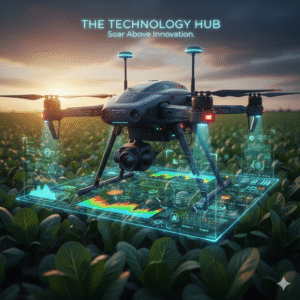
🌾 2. UAVs in Agriculture — Smart Farming Is Taking Off
Farmers today are turning to drones for efficiency and precision. 🚜
They use UAVs to:
-
Monitor crop health via infrared imaging 🌿
-
Detect irrigation problems
-
Spray pesticides evenly
-
Generate 3D maps for field analysis
With smart sensors, drones help increase yield, reduce cost, and save resources — creating a new era of precision agriculture. 🌾🌦️
🎥 3. UAVs in Filmmaking and Media
Ever wondered how those breathtaking aerial shots are captured in movies or vlogs? 🎬
The answer: UAV drones!
High-quality cameras on drones like DJI Inspire or Skydio 2 allow filmmakers to capture stunning angles, chase sequences, and panoramic views that were once impossible without helicopters.
Drones have made professional cinematography accessible to anyone — even YouTubers and wedding videographers! 💍✨
🏗️ 4. UAVs in Construction and Real Estate
In construction and surveying, drones have become the ultimate assistant. 🏗️
They provide:
-
Real-time site mapping
-
Structural inspection
-
3D modeling of land and buildings
-
Progress tracking and safety assessments
Instead of risky manual inspections, engineers now use drones to access tall structures, reducing accidents and saving time.
🚑 5. UAVs in Healthcare and Emergency Response
In emergencies, speed saves lives.
UAV drones are being used to:
-
Deliver medical supplies and vaccines in remote areas
-
Assist in search and rescue operations
-
Survey disaster zones after earthquakes or floods 🌪️
Companies like Zipline in Africa are already using autonomous drones to deliver life-saving blood and medicine faster than any ambulance could. ❤️
🌍 6. Environmental Protection and Climate Research
Drones have also become Earth’s silent guardians 🌱
They help scientists and activists by:
-
Tracking deforestation and wildlife populations
-
Monitoring glaciers and sea levels
-
Measuring pollution and carbon levels
Solar-powered drones can stay airborne for days — making them perfect for continuous observation of the environment without harming it.
🏪 7. UAVs in Delivery and E-Commerce
The dream of having your package delivered by a drone is now a reality! 📦
Companies like Amazon, Google Wing, and UPS Flight Forward are testing UAV delivery systems for small parcels.
These systems promise:
-
Faster delivery times
-
Lower transportation costs
-
Reduced carbon emissions
Imagine ordering coffee beans online ☕ and getting them dropped at your door by a flying robot — that’s the future of convenience!
🧠UAVs + AI — The Smartest Partnership
Artificial Intelligence has taken UAV drones to a whole new level. 🤖
💡 AI Capabilities Include:
-
Autonomous Navigation: Drones learn to plan routes, avoid obstacles, and reach destinations independently.
-
Object Detection: Recognizing vehicles, people, or landmarks in real-time.
-
Predictive Maintenance: AI detects faults before they cause crashes.
-
Swarm Intelligence: Dozens of drones flying in coordination — used in light shows, defense formations, and environmental mapping.
AI isn’t just making drones smarter — it’s making them safer and more reliable for everyday use.
🌤️ The Future of UAV Drones — What’s Next?
The drone revolution is only getting started. The future looks limitless and thrilling! 🌌
Here’s what’s on the horizon:
-
5G-Connected Drones: Real-time data transfer for smarter control.
-
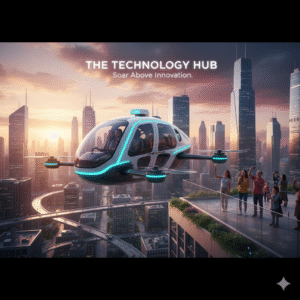
Drone Taxis: Companies like Volocopter and EHang are testing aerial taxis for urban transport. 🚖
-
Swarm Drones for Construction: Autonomous teams of drones building structures in remote areas.
-
Smart City Integration: Drones connected to IoT systems for surveillance, traffic monitoring, and logistics.
-
Eco-Friendly Designs: Solar-powered and biodegradable drone materials for sustainability.
The future sky will be busier — but smarter, safer, and greener than ever before. 🌤️
💼 Careers and Opportunities in the UAV Industry
If you love technology, the drone world is full of opportunities! 💼
Here are some growing career paths:
💼 Top Career Opportunities in the UAV Drone Industry 🚀
🧠 1. Drone Software Engineer
Designs and develops the brains behind UAVs — from flight control algorithms to navigation systems.
They work on coding, automation, and sensor integration to make drones smarter and more efficient.
It’s the perfect career for tech lovers passionate about AI, robotics, and aviation. 💻✈️
🎥 2. Aerial Photographer / Videographer
Uses drones to capture stunning visuals from breathtaking angles in films, real estate, and events.
These professionals combine creativity with technical skill to tell powerful visual stories.
Whether it’s a wedding shoot or a cinematic scene, the drone becomes their flying camera! 📸✨
🔧 3. UAV Maintenance Technician
Responsible for inspecting, repairing, and maintaining drones to ensure safe and reliable operation.
They handle everything from propeller balance to software updates and battery management.
Without them, the drone industry’s entire flight ecosystem would be grounded. ⚙️🛠️
🤖 4. AI Developer for Drone Systems
Creates the intelligent software that lets drones make decisions on their own — like obstacle avoidance or object detection.
They train machine learning models and integrate advanced vision systems into UAVs.
In short, they give drones the ability to “think” while they fly! 🧠🚁
🧭 5. Flight Operations Specialist
Oversees flight planning, airspace compliance, and safety procedures for UAV missions.
They coordinate with pilots, engineers, and clients to ensure every mission runs smoothly.
This role combines leadership, technical skill, and precision — perfect for organized innovators. 🕹️📋
📊 6. Drone Data Analyst
Turns aerial data into valuable insights using mapping tools and analytics software.
They process 3D imagery, thermal data, or environmental scans for industries like construction or agriculture.
Their work helps decision-makers plan smarter, faster, and more accurately. 🌍📈
Leading companies like Skydio, DJI, and Parrot are constantly hiring innovative minds to shape the sky-tech future. 🚀
🧭 Challenges and Ethical Considerations
While UAV drones bring innovation, they also raise important questions:
-
Privacy: Unauthorized aerial surveillance can invade personal spaces.
-
Safety: Drone collisions or technical malfunctions pose air risks.
-
Regulation: Governments worldwide are still catching up with laws for safe drone use.
-
Security: Hacking or misuse of UAVs can lead to threats if not properly controlled.
The key to responsible drone innovation is balance — promoting progress while ensuring safety and ethics remain at the forefront. ⚖️
🌈 Conclusion: The Sky Is Just the Beginning
UAV drones are not just machines — they are symbols of human creativity, innovation, and vision. 🌍💡
They’ve moved from military tools to mainstream marvels, helping us see, deliver, protect, and connect like never before.
From farmers to filmmakers, from emergency teams to engineers — UAV drones have given everyone a pair of wings. 🕊️
And as AI and technology continue to evolve, one thing is certain:
The sky is no longer the limit — it’s our new beginning. 🚀✨